

Angkor Wat & Angkor Temples – Complete Guide and Best Tours in Siem Reap
The Angkor temples form one of the most extraordinary archaeological sites in the world and are recognized as a UNESCO World Heritage Site. Built between the 9th and 15th centuries by the Khmer Empire, they combine history, spirituality, and a unique architectural style that reaches its peak at Angkor Wat. Exploring these temples with a professional local guide allows you to enjoy private tours with vehicle, personalized routes, and explanations that help you understand each monument while avoiding crowds and saving time.
On this page, you’ll find a selection of the most important temples in Siem Reap, with videos filmed on-site and clear descriptions to help you plan your visit. From sunrise at Angkor Wat to the quieter corners of the archaeological park, here you can discover what to see and how to organize a complete itinerary through the must-visit temples of Cambodia. Let’s explore them…

ANGKOR WAT – THE LARGEST TEMPLE IN THE WORLD
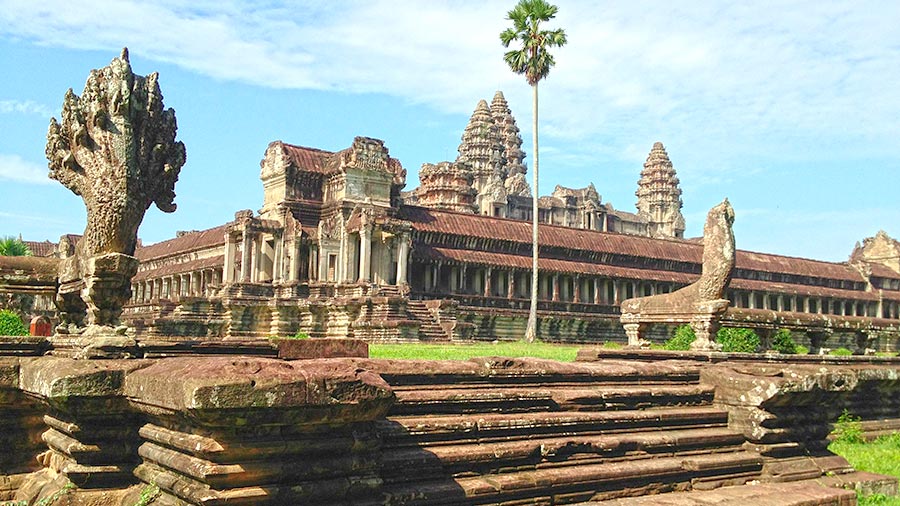
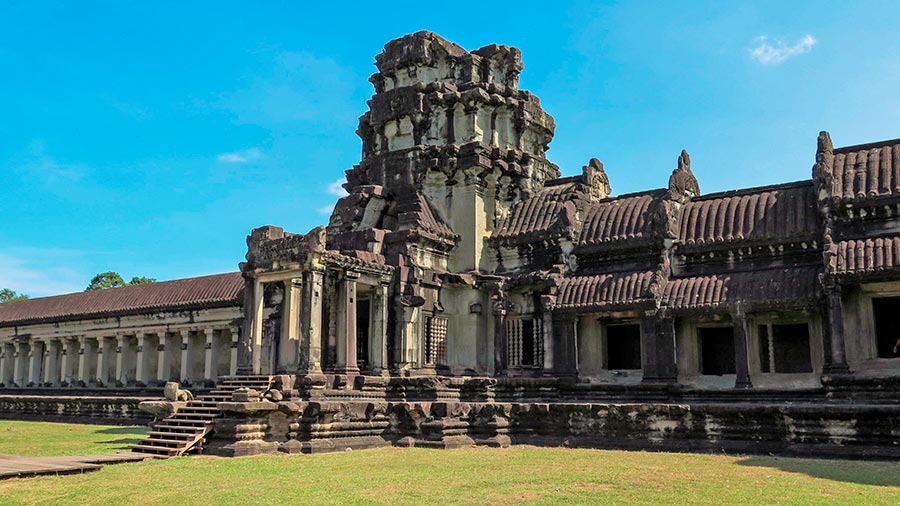
Angkor Wat is the most iconic temple in Cambodia and the greatest architectural achievement of the Khmer Empire. Its five lotus towers rise above a vast moat like a sacred mountain, and crossing the stone causeway feels like entering a world suspended between history, mythology, and divine symbolism. Built in the early 12th century by King Suryavarman II and dedicated to Vishnu, it remains a masterpiece of harmony, proportion, and spiritual geometry.
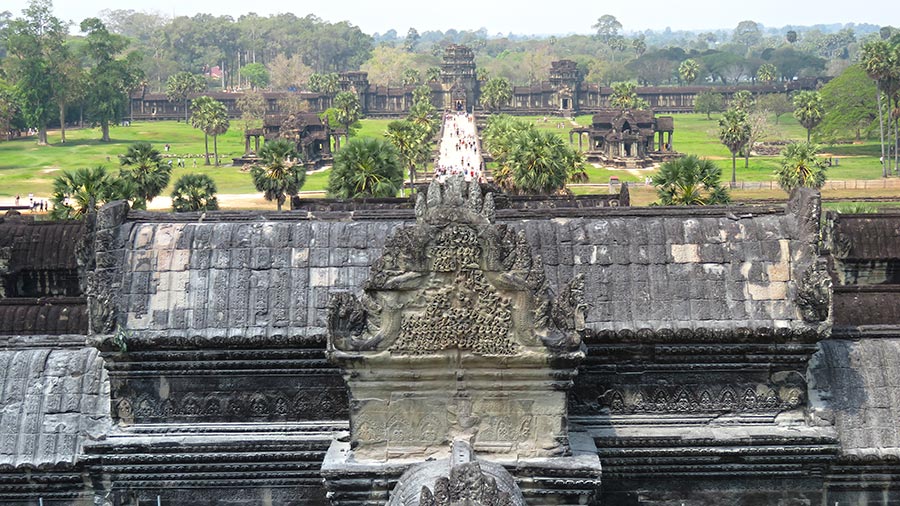
The visit begins at the edge of the immense moat that surrounds the temple. At sunrise, the reflection of the towers on the water, the sound of birds, and the morning mist create one of the most unforgettable scenes in Southeast Asia. As you walk along the main causeway, the towers align with perfect precision—an intentional design that reveals the astronomical and symbolic sophistication of the Khmer architects.
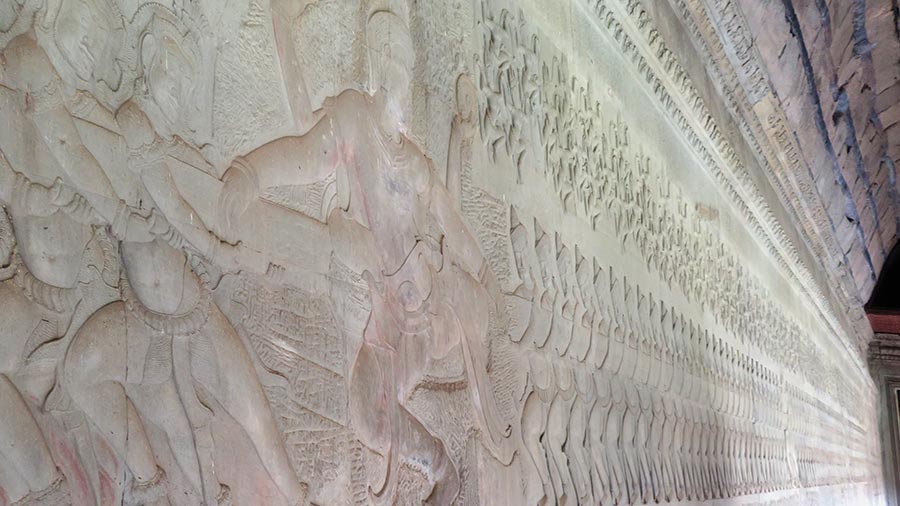
Inside the galleries you’ll find some of the finest bas-reliefs in Khmer art. More than 800 meters of carved walls depict epic scenes such as the Churning of the Ocean of Milk, royal processions, mythological battles, and episodes from Hindu cosmology. Each panel is a narrative carved in stone, full of details that are easy to miss without expert interpretation.
This is where a professional local guide becomes invaluable—helping you understand characters, gestures, and symbols, and revealing quieter corners such as the best-preserved devatas or carvings that still retain traces of original pigment. A guide also helps you navigate the temple efficiently and avoid the busiest areas.
Climbing the central tower is one of the highlights of the visit. The steep staircase symbolizes the difficulty of reaching the realm of the gods. From the top, the view opens over the jungle and the inner courtyards, offering a perfect perspective to understand the concept of Mount Meru, the cosmic axis in Hindu cosmology.
Angkor Wat is vast, and exploring it without rushing allows you to appreciate details many visitors overlook. Having private transportation makes it easier to adjust the schedule, avoid peak hours, and enjoy the temple during the most beautiful light—especially at sunrise or late afternoon.
ANGKOR THOM – THE GREAT IMPERIAL CITY
Angkor Thom was the last great capital of the Khmer Empire and one of the most remarkable walled cities in Asia. Built by Jayavarman VII at the end of the 12th century, this fortified metropolis covers nine square kilometers and is protected by a massive moat and stone walls crowned with serene-faced towers. Entering Angkor Thom feels like crossing into a royal city where architecture, spirituality, and political power were perfectly intertwined.
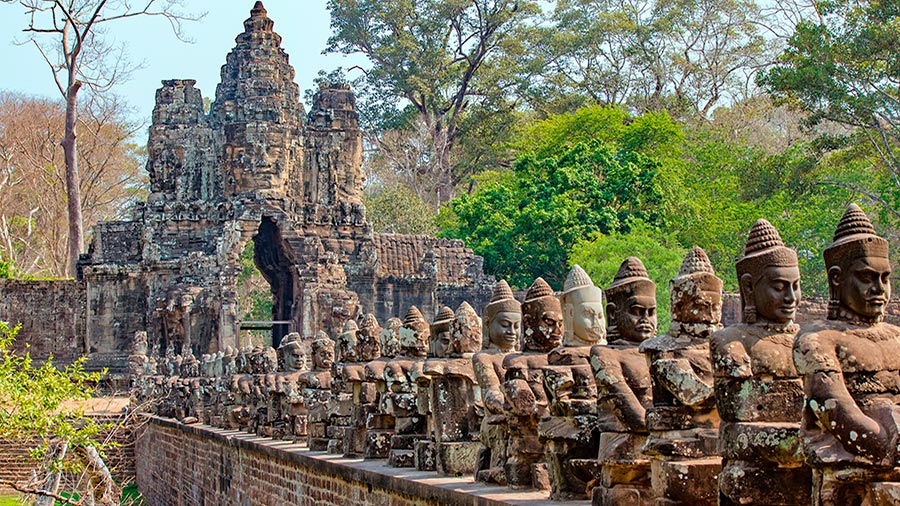
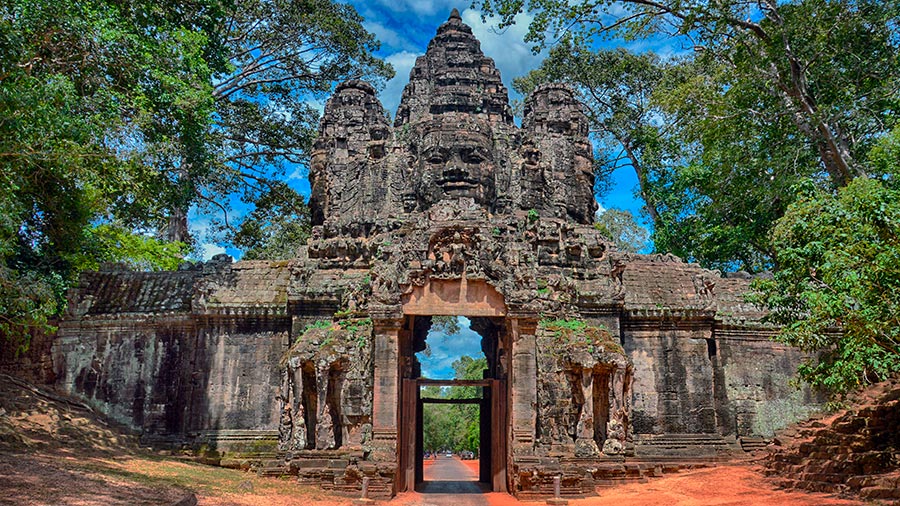
The most iconic entrance is the bridge leading to the South Gate, lined with a dramatic procession of devas and asuras reenacting the Churning of the Ocean of Milk. On one side stand the gods; on the other, the demons—each pulling the naga serpent in a symbolic struggle between cosmic forces. At the end of the bridge rises the monumental gate, crowned with four giant faces gazing outward like silent guardians of the ancient capital.
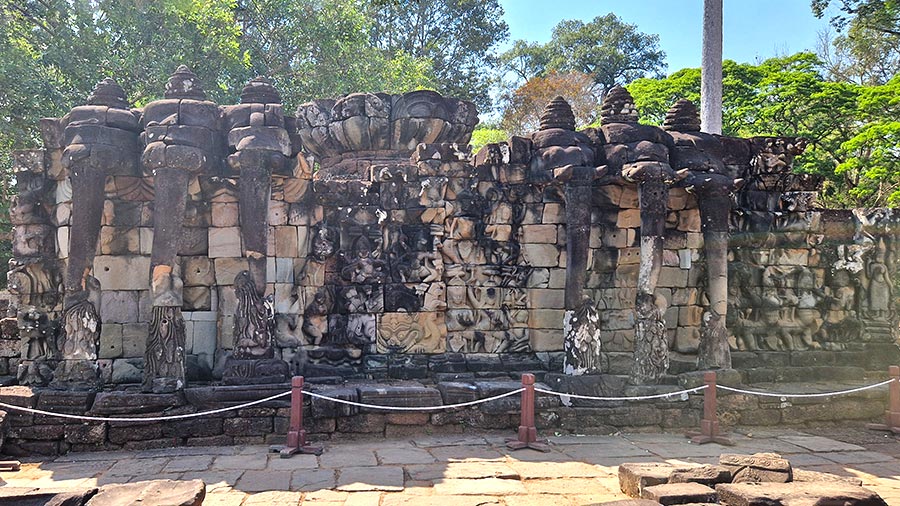
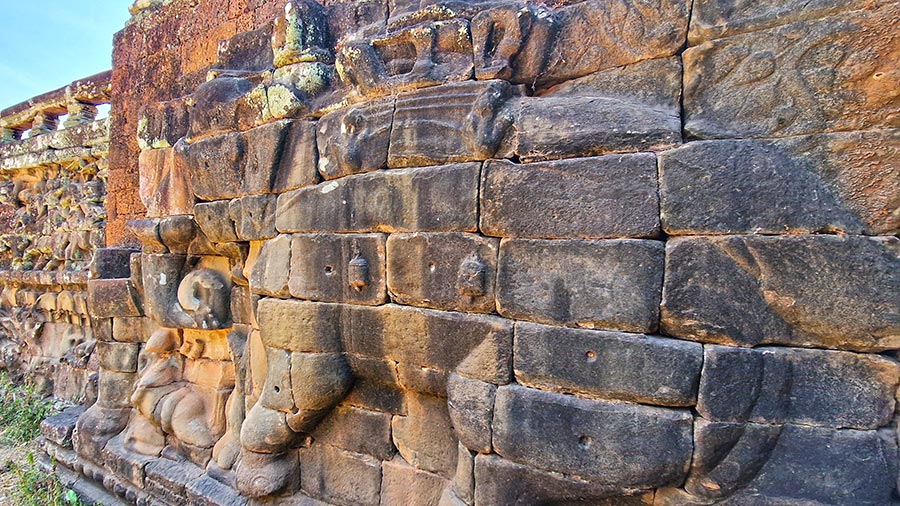
Once inside, wide paths open between centuries-old trees and the remains of royal avenues. At the heart of the enclosure stands Bayon, but Angkor Thom contains many other fascinating structures: the Elephant Terrace, the Terrace of the Leper King, Baphuon, Phimeanakas, and smaller temples hidden among the vegetation. Each monument reveals a different aspect of Khmer court life, religious ceremonies, and the city’s political significance.
Exploring Angkor Thom with a local guide who knows the site in depth helps you understand the symbolism of the gates, the purpose of the ceremonial terraces, and the role each temple played within the city. A guide also points out subtle carvings, weathered sculptures, and strategic viewpoints that reveal the scale and sophistication of the walled enclosure.
Angkor Thom is vast, and visiting its different areas requires time and good planning. Having private transportation makes it easy to move comfortably between temples and adjust the route according to daylight, weather, or your preferred pace. This allows you to enjoy the monumental gates, terraces, and inner temples without rushing and at the most pleasant times of day.
BAYON – THE TEMPLE OF FACES
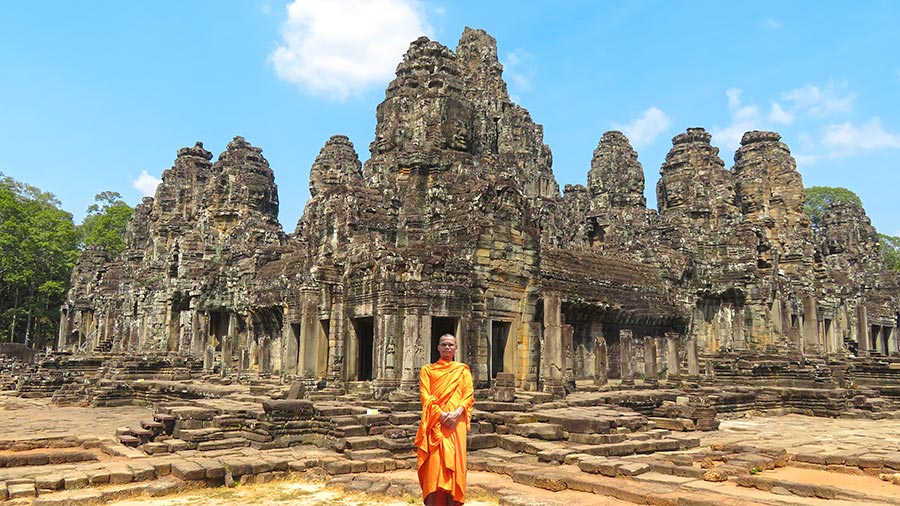
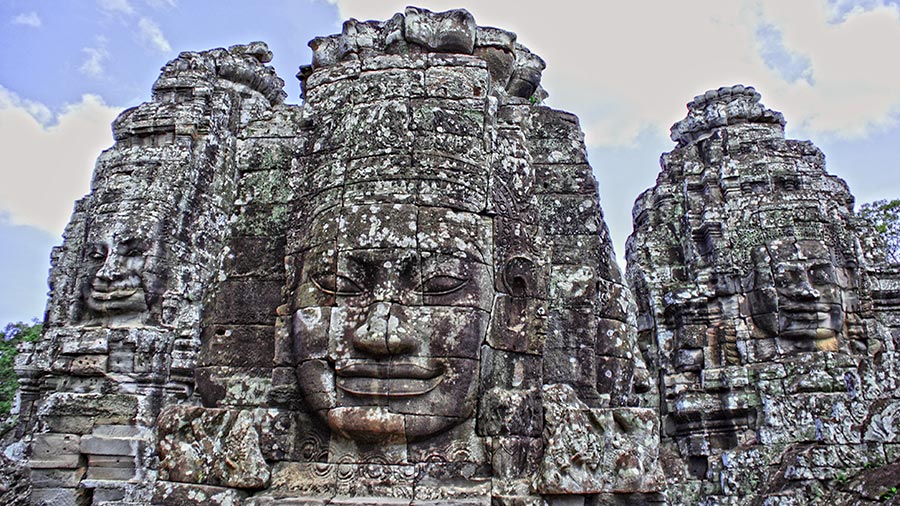
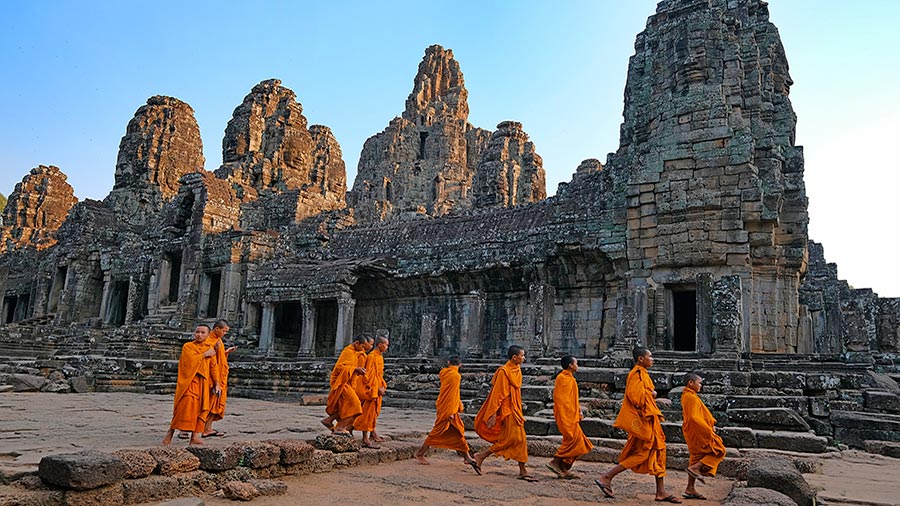
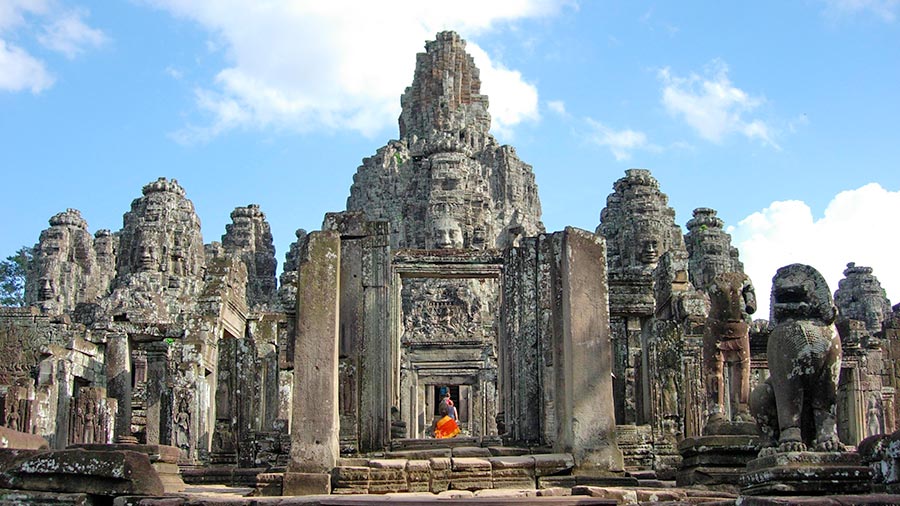
Bayon is one of the most captivating and mysterious temples in Angkor, famous for its more than two hundred smiling stone faces gazing serenely in every direction. Rising at the center of Angkor Thom, its towers crowned with giant faces create an atmosphere that feels both spiritual and otherworldly. Built in the late 12th century by Jayavarman VII, Bayon blends Buddhist symbolism, intricate architecture, and a unique sense of presence that changes beautifully with the light of day.
The visit begins through narrow corridors and towers that rise like a forest of stone. As you move deeper inside, the faces appear above you—calm, enigmatic, almost alive. Each one has subtle differences, and the shifting light between the towers creates a play of shadows that transforms the temple from every angle.
On the lower levels you’ll find some of the most detailed bas-reliefs of the Khmer Empire. Scenes of markets, naval battles, royal processions, rituals, and everyday life stretch along the walls like a carved chronicle of the 12th century. These reliefs are full of movement and tiny details that reward slow, attentive exploration.
This is where a specialized Angkor guide becomes invaluable. Their knowledge helps interpret the scenes, identify historical figures, and explain the meaning behind the faces that crown the towers. They also lead you to quieter corners where lesser-known carvings remain preserved and where you can appreciate the architecture without crowds.
Climbing to the upper terraces brings you face-to-face with the giant expressions. From here, the temple reveals its vertical structure and symbolic design, created to elevate the visitor toward a space closer to the spiritual world. It is a place that invites stillness, contemplation, and photography.
Bayon is a temple full of nuances, and exploring it slowly allows you to appreciate its depth. Having private transportation makes it easy to organize the route flexibly, combining Bayon with other temples in Angkor Thom and arriving at times when the light best highlights the carvings and the expressions of the faces.
TA PROHM – THE TEMPLE OF ROOTS
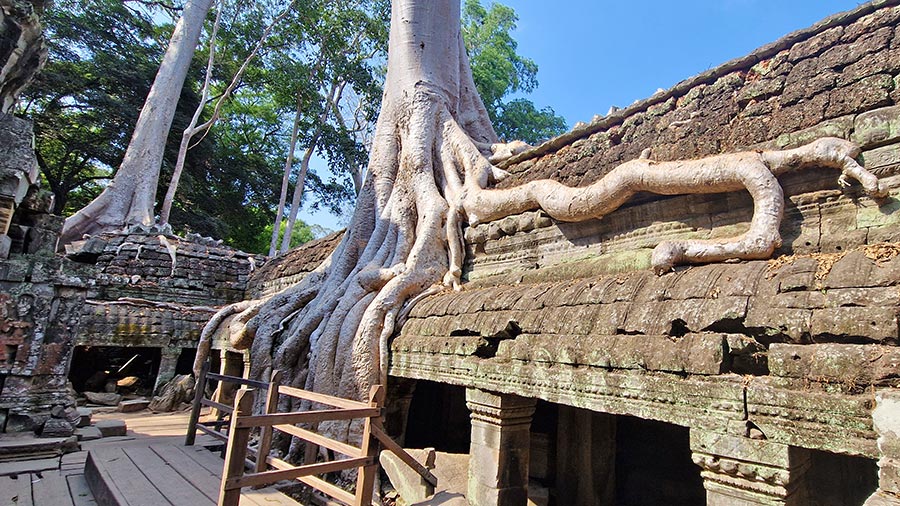
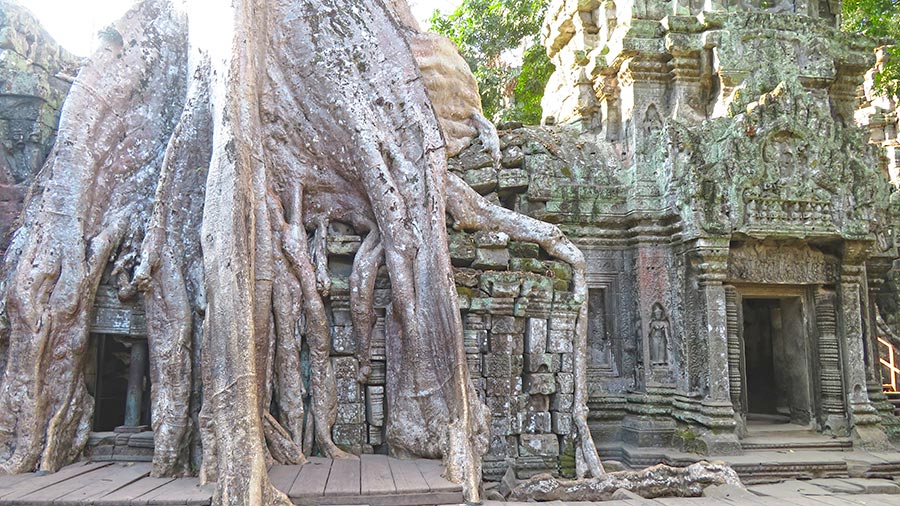
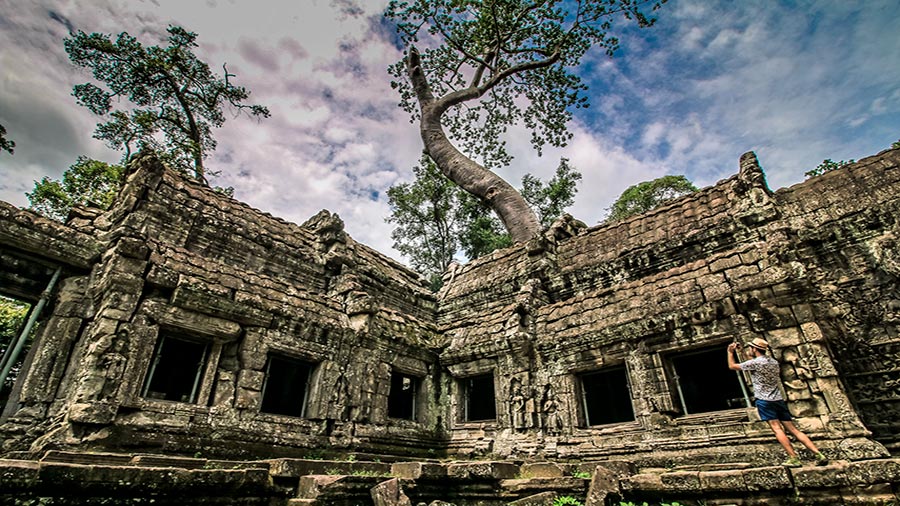
Ta Prohm is the temple where nature and Khmer architecture intertwine in the most dramatic and unforgettable way. Its moss-covered towers, fractured galleries, and the enormous tree roots embracing the stone walls create a scene that feels almost unreal. Built in the late 12th century by Jayavarman VII as a monastery and learning center, Ta Prohm was intentionally left in a semi-ruined state to showcase how the jungle reclaimed it over time.
The visit begins among collapsed corridors and quiet courtyards where silk-cotton trees and strangler figs cling to the stones as if they were part of the original design. Light filters through the canopy, casting shifting shadows that change with every step. In some areas, the roots seem to support the walls; in others, they pierce through them like living sculptures.
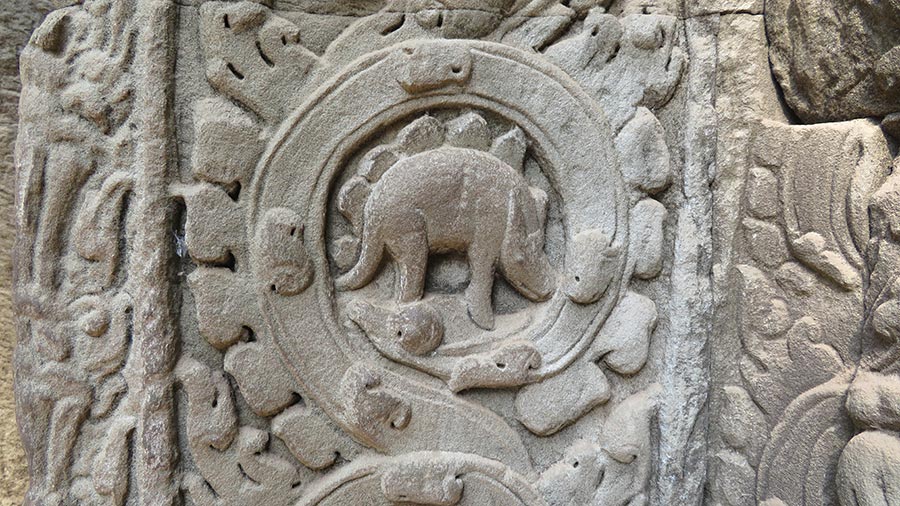
Among the most intriguing details is the famous carving that many interpret as a dinosaur, a figure that continues to spark curiosity among travelers. Equally remarkable are the finely carved devatas, the narrow stone corridors, and the courtyards where vegetation has created shapes that seem sculpted by time itself.
This is where a professional expert local guide becomes essential. Their knowledge helps you find hidden carvings, understand how the temple was constructed, and discover corners that most visitors overlook. They also explain the history of the monastery, its spiritual purpose, and why Ta Prohm has been preserved in such an evocative state.
Ta Prohm is a labyrinth, and exploring it slowly allows you to appreciate the beauty of its ruins without rushing. Having private transportation makes it easy to adjust the schedule, avoid peak hours, and enjoy the temple when the light is softer—especially early in the morning or late in the afternoon, when the jungle seems to wrap around it completely.
BANTEAY SREI – THE TEMPLE OF WOMEN
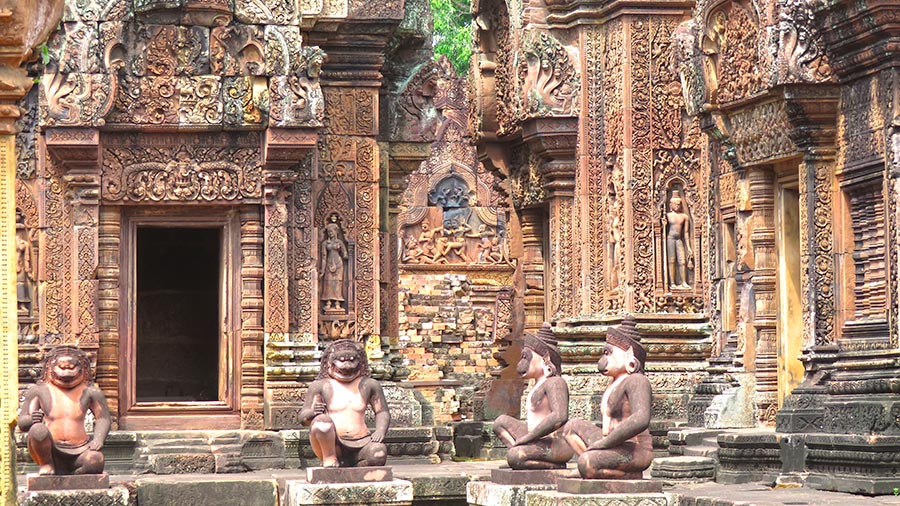
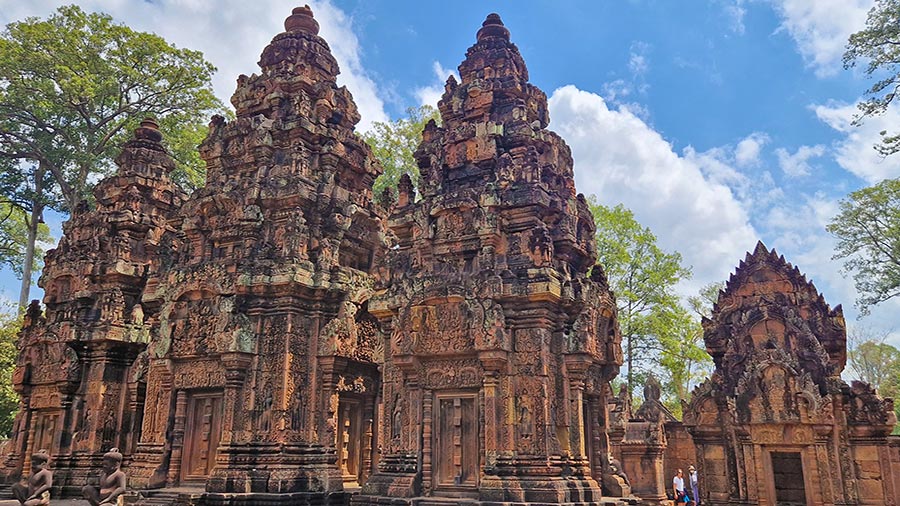
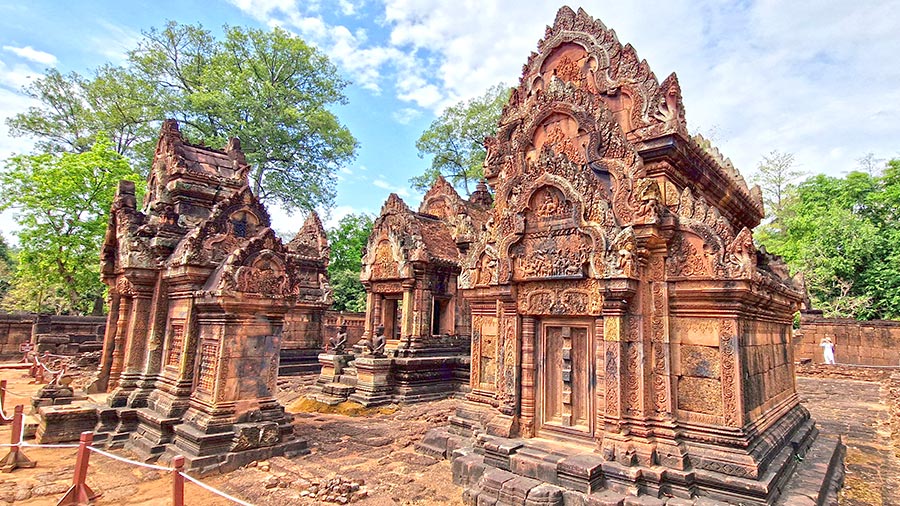
Banteay Srei is one of the most distinctive and enchanting temples in Angkor. Built in the 10th century and dedicated to Shiva, it is known as the “Temple of Women” due to the extraordinary delicacy of its carvings. Sculpted in pink sandstone that glows warmly under the sunlight, Banteay Srei feels more like a jewel than a temple—small, refined, and filled with details that captivate even the most seasoned travelers.
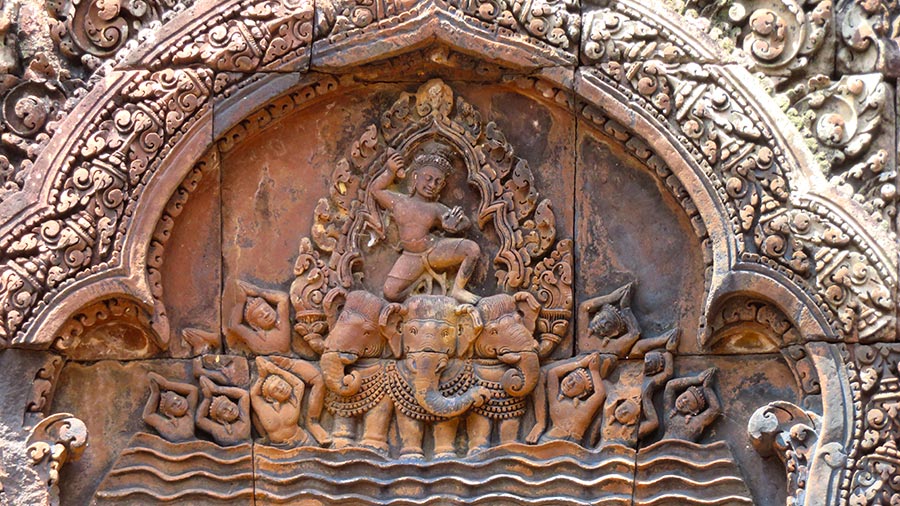
The visit begins before its beautifully proportioned towers, carved with a level of precision that seems almost impossible for the time. The devatas, pediments, and narrative panels depict scenes from the Ramayana and other sacred stories with a refinement unmatched anywhere else in Angkor. Every figure, floral motif, and decorative pattern appears crafted with the meticulousness of a master artisan.
As you walk through the inner courtyards, the light enhances the pink tones of the stone and reveals carvings so fine they look woven. It is a temple that invites slow exploration—getting close, observing, and discovering small details that shift with the changing light. Its intimate scale creates a peaceful atmosphere, very different from the monumental temples of the main archaeological park.
The experience becomes even richer with a local guide experienced in Khmer art, who can explain the meaning of the carvings, identify mythological episodes, and highlight subtle details that most visitors overlook. Their knowledge helps you understand why Banteay Srei is considered the masterpiece of Angkorian relief work and what makes it so unique within the empire’s architectural legacy.
Banteay Srei lies about 35 kilometers from the main temple area, and its remote location makes private transportation especially valuable. It allows you to arrive during the most favorable light—when the pink sandstone turns golden and the carvings appear at their most vivid—while also combining the visit with nearby sites without depending on rigid schedules.
PRE RUP – THE SUNSET MOUNTAIN TEMPLE
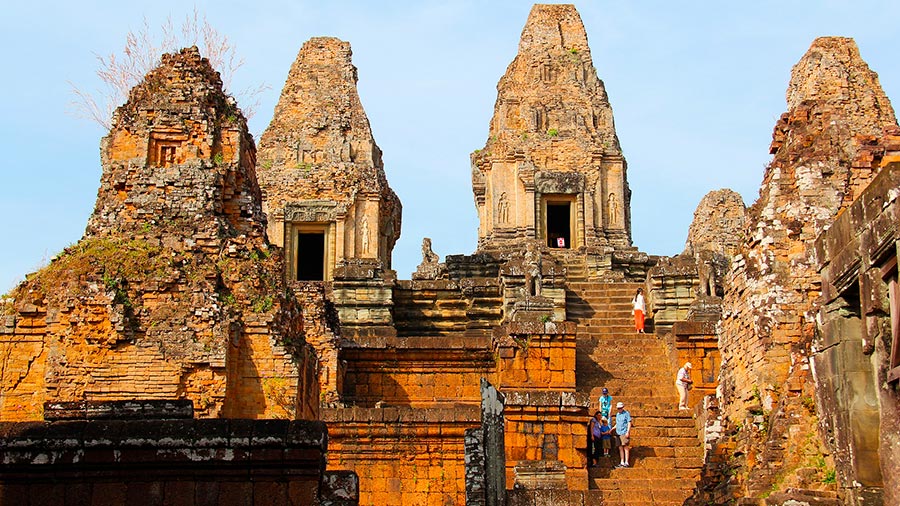
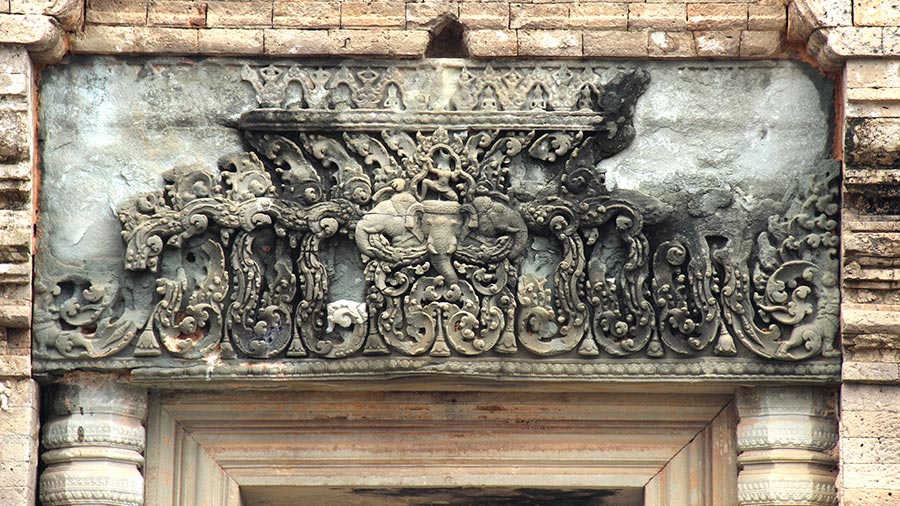
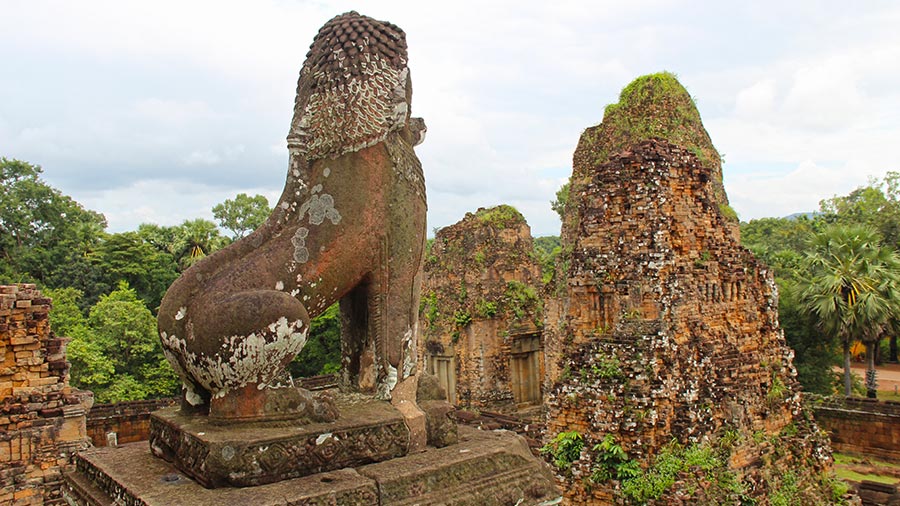
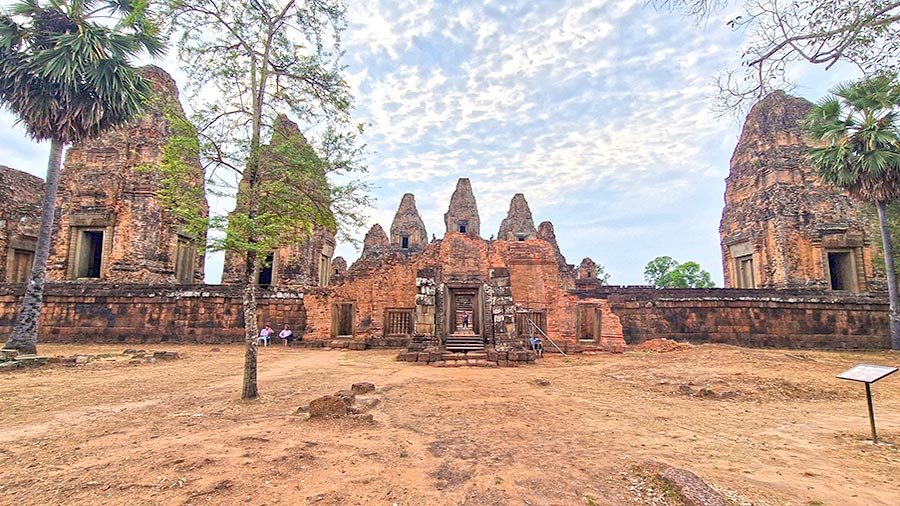
Pre Rup is one of Angkor’s most elegant mountain temples. Built in the 10th century during the reign of Rajendravarman II and dedicated to Shiva, it stands out for its reddish brick architecture, which glows warmly at sunrise and sunset. Its name means “turning the body,” a reference to ancient funerary rituals that local tradition associates with the site. The combination of laterite, brick, and sandstone gives the temple a distinctive texture that seems to ignite under the sunlight.
The visit begins at the base of the temple, where towers and platforms rise in three levels symbolizing the ascent toward the divine world. As you climb its steep stairways, the views open toward the fields and jungle surrounding Angkor. The weathered brick reveals traces of ancient inscriptions and carvings that still retain their form despite the passage of centuries.
On the upper levels stand the sanctuary towers, from which you can appreciate the temple’s pyramidal structure and the harmony of its proportions. Sunset is especially beautiful at Pre Rup: the walls take on an intense reddish tone, and the long shadows highlight the geometry of the complex. It is one of the best places in the archaeological park to enjoy the transition between day and night.
The experience becomes richer with a local guide knowledgeable in Khmer architecture, who can explain the temple’s ritual function, the symbolism of its levels, and the techniques used to work brick and sandstone. They also help identify details often overlooked, such as the remains of stucco that once covered the towers or the traces of sculptures now lost.
Pre Rup is located away from the most visited temples, and its open surroundings invite a peaceful exploration. Having private transportation makes it easy to include it in a route through the eastern temples of Angkor and arrive during the most pleasant light, when the temple displays its characteristic color and most evocative atmosphere.
TA KEO – THE UNFINISHED PYRAMID
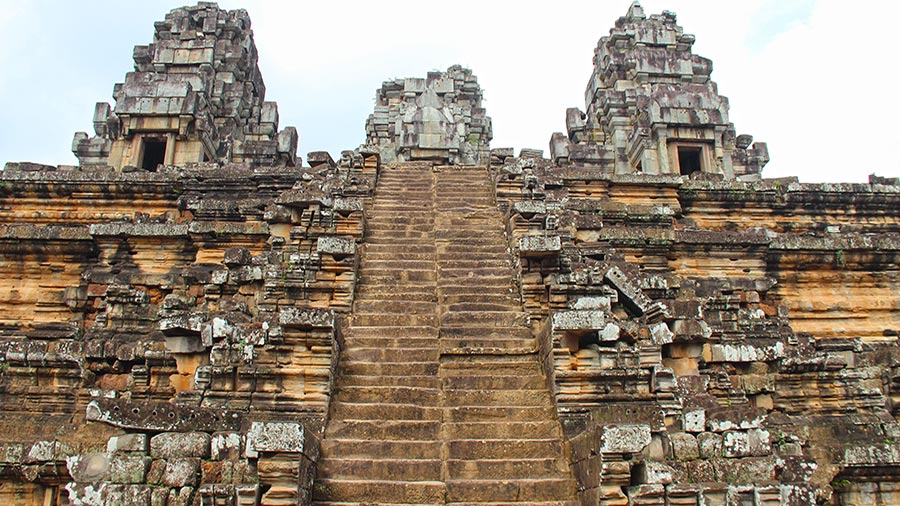
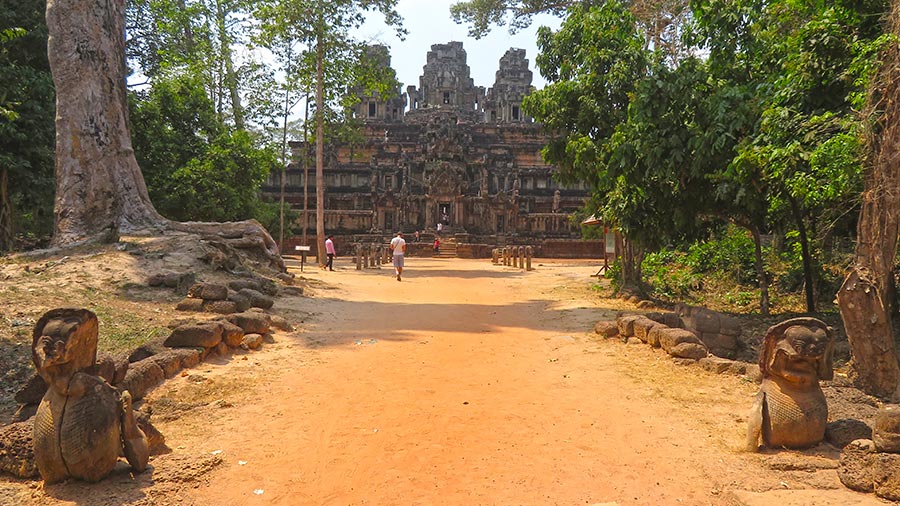
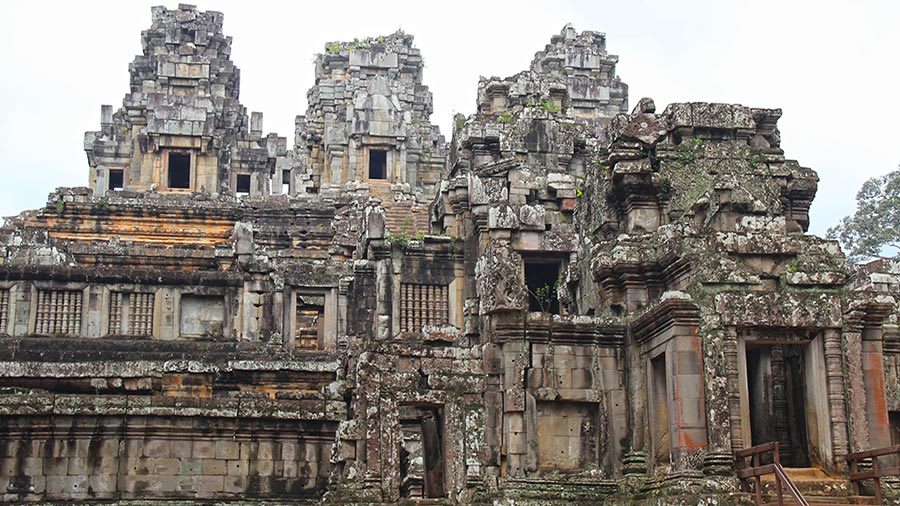
Ta Keo is one of Angkor’s most imposing mountain temples. Built at the end of the 10th century and dedicated to Shiva, it stands out for its austere and powerful appearance: massive sandstone blocks rising in a stepped pyramid with almost no decoration. Its construction was never completed, giving it a unique character within the complex—as if time had frozen before artisans could cover it with carvings and sculptures.
The visit begins at the base of its monumental structure, where platforms overlap with precise geometry. Unlike other temples, here the bare stone takes center stage. The absence of ornamentation highlights the magnitude of the architectural work and the solidity of the blocks, which seem placed with mathematical accuracy.
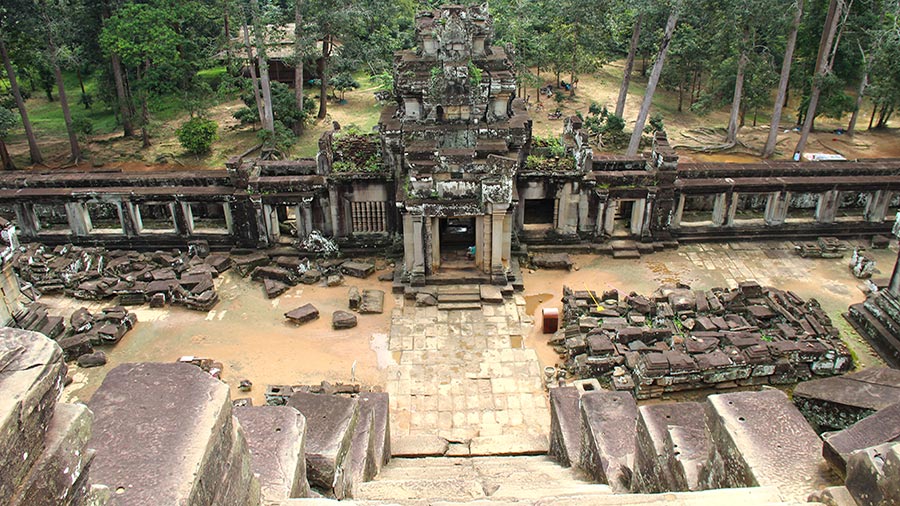
As you climb its steep stairways, the view opens over the jungle surrounding Angkor. The height of the temple and the verticality of its levels create the sensation of ascending a sacred mountain. At the top, the sanctuary towers offer a quiet space from which to contemplate the landscape and understand Ta Keo’s symbolic intention: representing Mount Meru, the cosmic axis in Hindu cosmology.
The experience becomes richer with a local guide deeply knowledgeable in Khmer architecture, who can explain why the temple was left unfinished, how sandstone was worked, and what techniques were used to build structures of this scale. They also point out subtle details often overlooked, such as stonemason marks or traces of carvings that were never completed.
Ta Keo invites visitors to climb slowly and enjoy the views from its upper levels. Having private transportation makes it easy to include it in a route through the eastern temples of Angkor and choose the times of day when the light best highlights the texture of the stone—especially in the morning, when the temple seems to awaken in golden tones.
TA SOM – THE ROOT-EMBRACED GATE TEMPLE
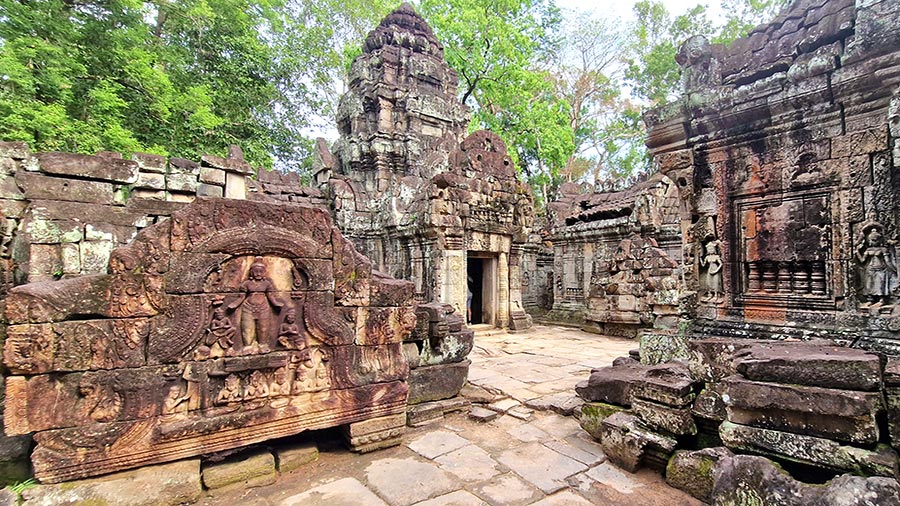
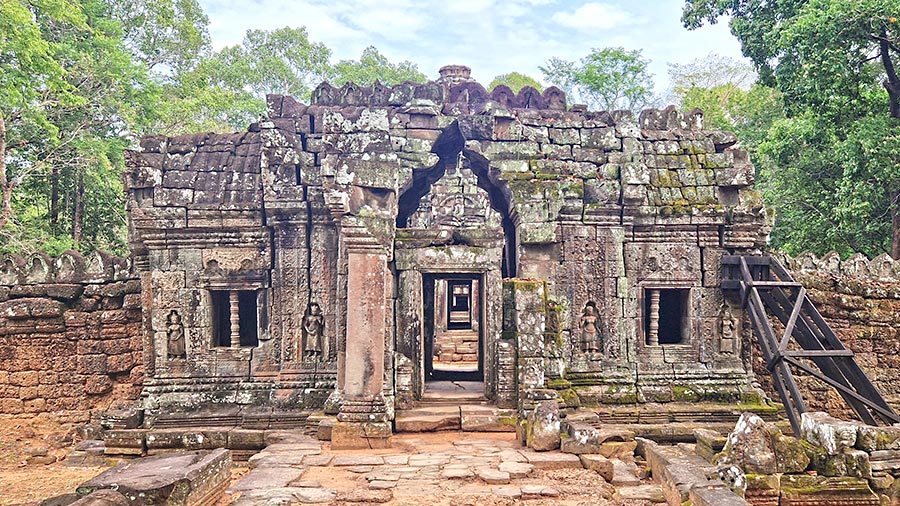
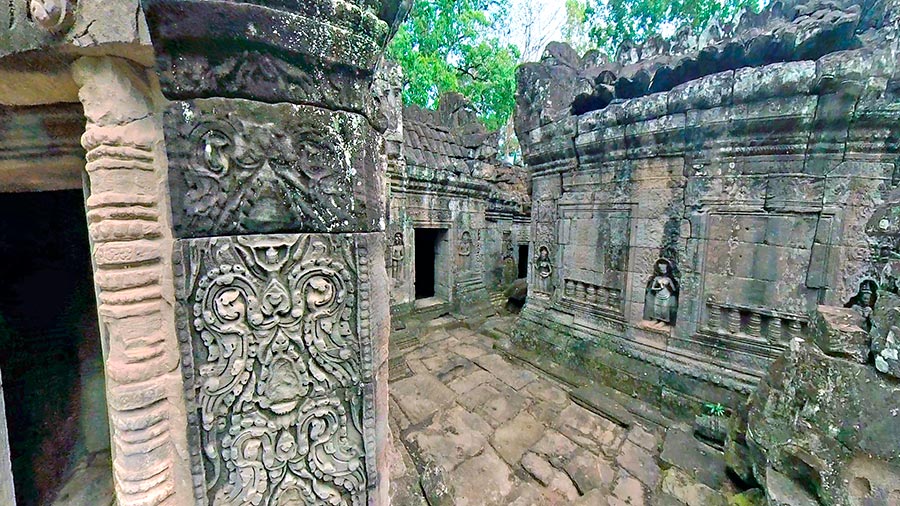
Ta Som is a small yet enchanting temple built in the late 12th century by Jayavarman VII. Although it lacks the monumental scale of other Angkor temples, its peaceful atmosphere and location along the Grand Circuit make it a memorable stop. Its layout follows the classic Bayon-style design, with sandstone towers, narrow corridors, and sanctuaries partially reclaimed by vegetation. It is an ideal temple for travelers seeking quieter corners and a more intimate experience within the archaeological park.
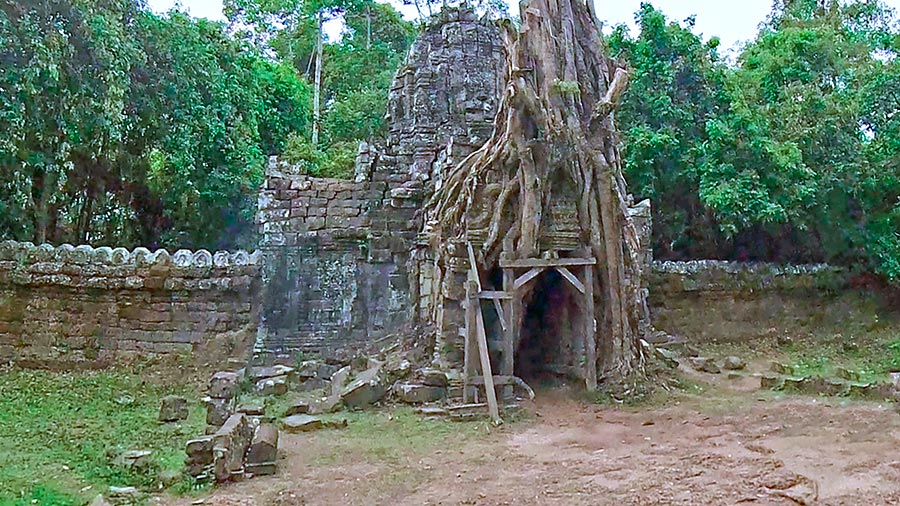
The most iconic feature of Ta Som is its eastern gate, completely embraced by the roots of a massive fig tree. This image—similar to Ta Prohm but in a calmer, less crowded setting—has become the temple’s signature landmark. The visit also reveals partially collapsed galleries, moss-covered courtyards, and towers decorated with serene Bayon-style faces. The blend of stone and nature creates a tranquil atmosphere that invites slow, mindful exploration.
Visiting Ta Som with a professional local guide helps you understand its role during the reign of Jayavarman VII, identify architectural details often overlooked, and learn the story behind its famous root-covered gate. Since it is located away from the main temples, arriving in a private vehicle is especially convenient, making it easy to combine with Neak Pean, East Mebon, or Pre Rup on the same route.
Ta Som is perfect for those who enjoy temples wrapped in nature and prefer less crowded sites. Its compact size allows for a relaxed visit, and its eastern gate offers one of the most iconic photographs of the Grand Circuit. It is an ideal stop to complement the more monumental temples and add a touch of tranquility to your Angkor itinerary.
BANTEAY KDEI – THE QUIET MONASTERY
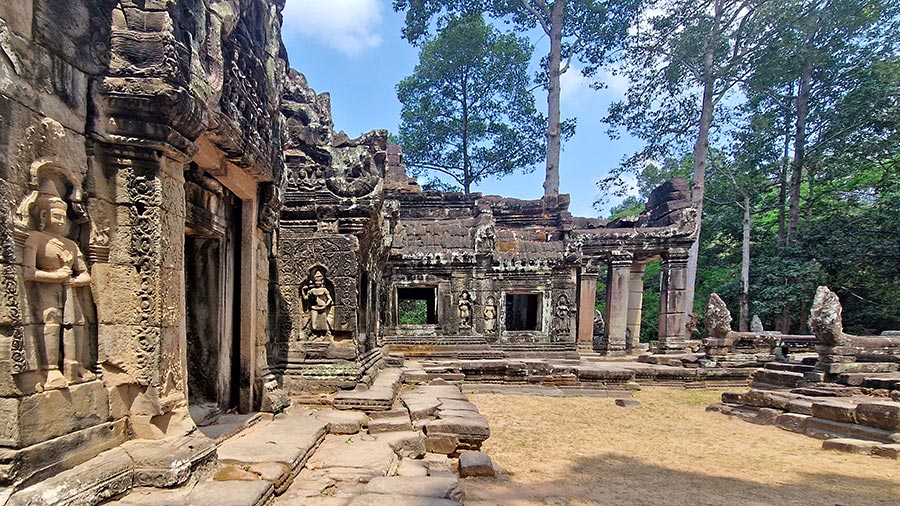
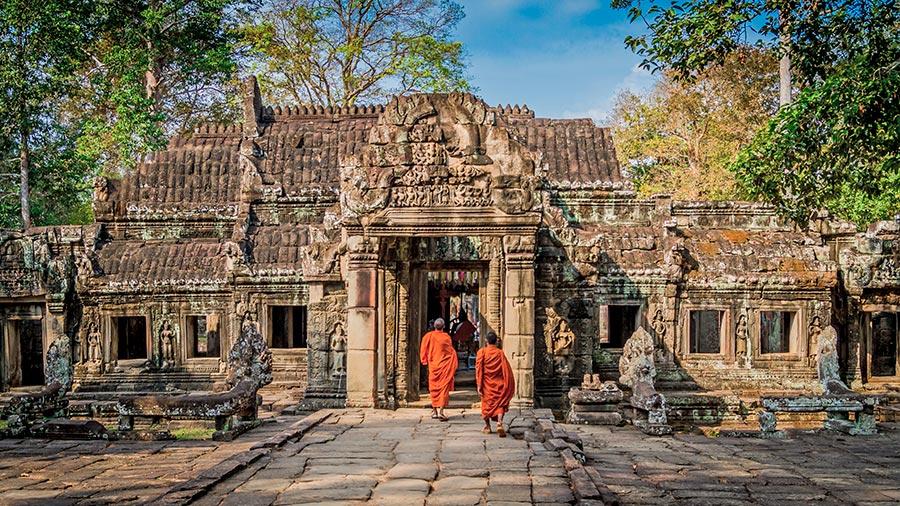
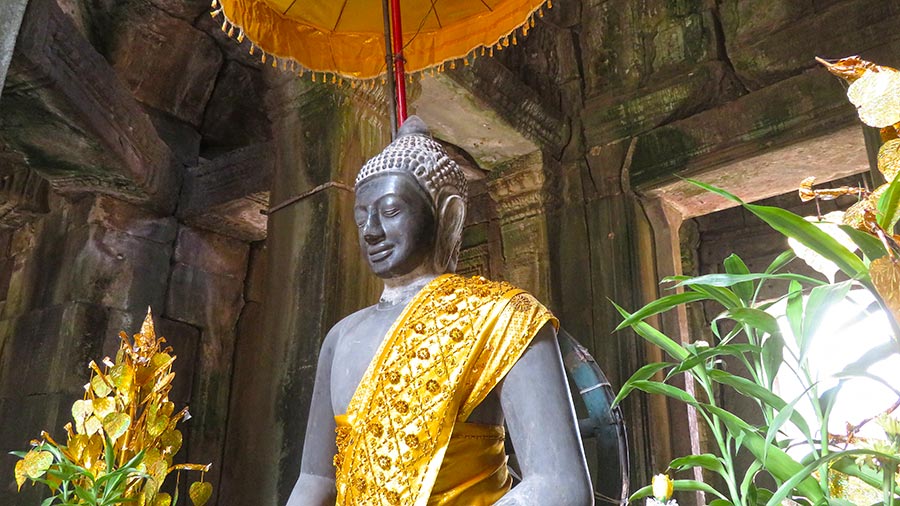
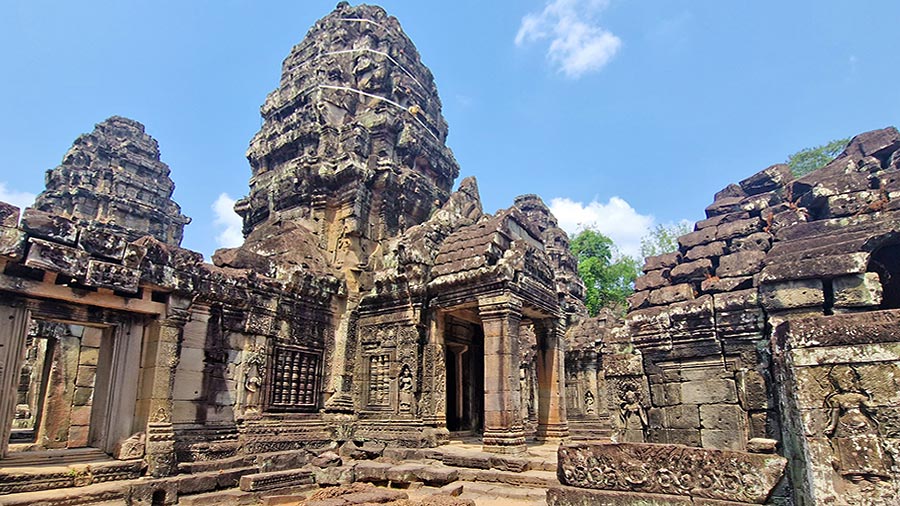
Banteay Kdei is a 12th-century monastic temple built during the reign of Jayavarman VII and dedicated to Mahayana Buddhism. Its name means “The Citadel of Cells,” reflecting its original function as a residence for monks. Among its most interesting areas are the Hall of the Dancers, the inner sanctuaries, and the ornate gates marking the entrance to each enclosure. Its laterite walls, sandstone towers, and silent courtyards create a peaceful atmosphere ideal for slow, reflective exploration.
The visit begins by crossing its main gate, crowned with a serene face gazing in the four directions. As you walk deeper inside, long corridors appear, along with columns tilted by time and galleries opening into courtyards where soft light filters through the trees. The atmosphere evokes an ancient monastery—a place designed for meditation and spiritual retreat.
Inside, you’ll find finely carved devatas, the remains of ancient libraries, and intersecting corridors that form a small labyrinth. Although parts of the temple are in ruins, the blend of weathered stone and vegetation gives it a special charm. In some areas, roots begin to embrace the walls, reminding visitors of the power of the surrounding jungle.
The experience becomes richer with a local guide familiar with monastic temples, who can explain the original function of the complex, point out subtle architectural details, and reveal corners that often go unnoticed. Banteay Kdei is located in a quiet area of the park, near Srah Srang lake, making it ideal for a calm visit. Having private transportation makes it easy to combine it with other eastern temples and arrive at times of day when the light enhances the texture of the stone and the peaceful atmosphere of the site.
NEAK PEAN – THE SACRED ISLAND TEMPLE
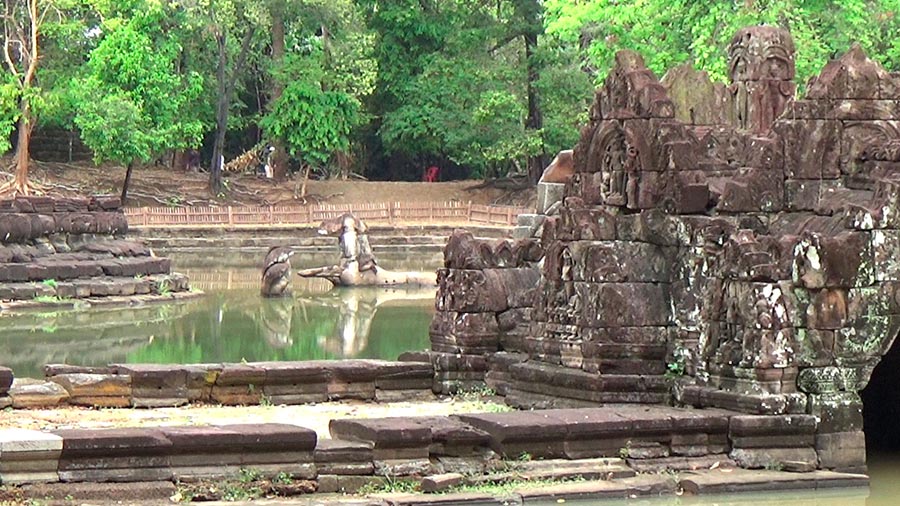
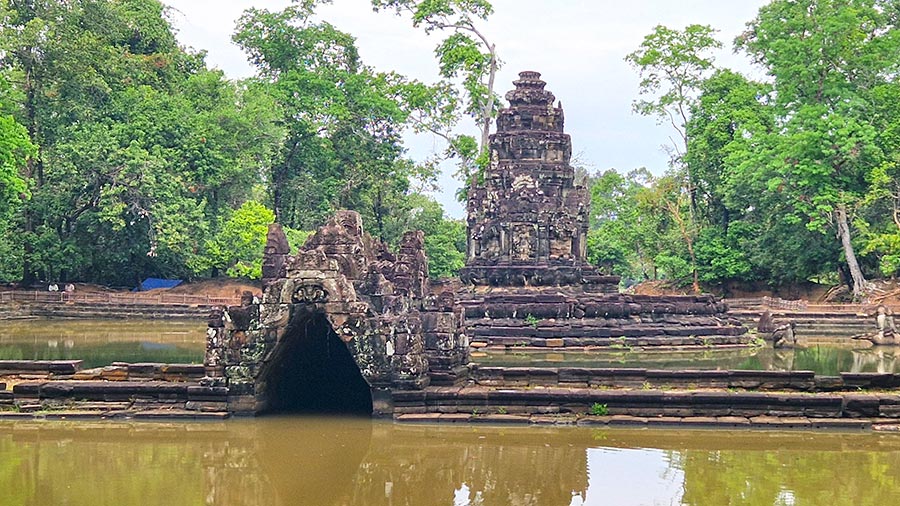
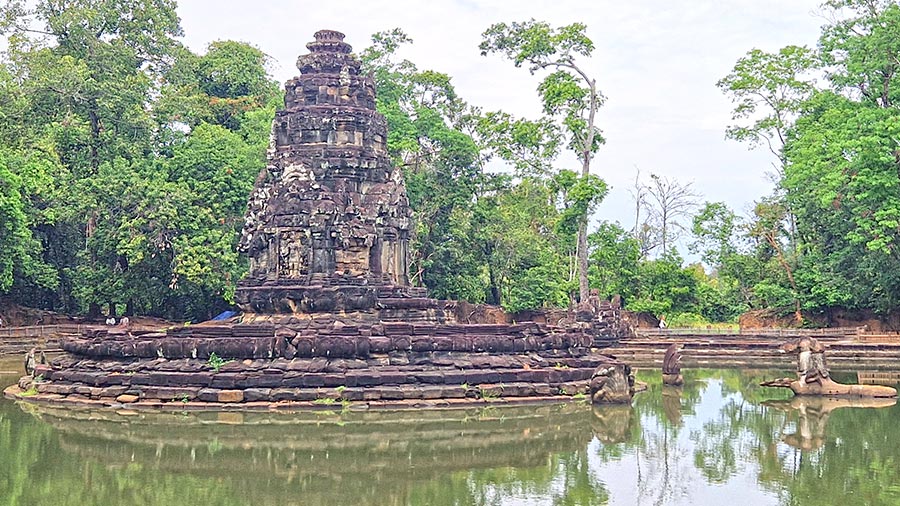
Neak Pean is one of the most unique temples in Angkor and a true rarity within the complex. Built by Jayavarman VII in the 12th century, this sanctuary sits at the center of a large artificial reservoir and is surrounded by four smaller pools symbolizing the elements. Its design represents the mythical island of Anavatapta, a sacred Himalayan lake whose waters were believed to possess healing properties. This symbolism makes Neak Pean a deeply spiritual and distinctive temple.
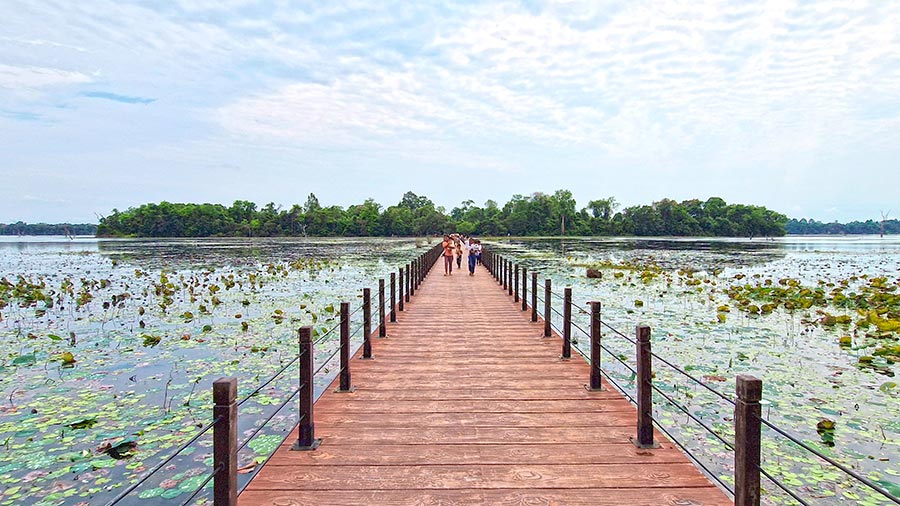
Access to the temple is via a wooden walkway that crosses a landscape of water, vegetation, and trees emerging from the lake, creating a peaceful and almost meditative atmosphere. At the center of the reservoir stands the main sanctuary, decorated with two intertwined nagas that give the temple its name (“The Coiled Serpents”). Although entering the sanctuary is not permitted, the view from the walkway allows you to appreciate its structure, its reflection on the water, and the harmony of the entire ensemble.
Visiting Neak Pean with a professional local guide helps you understand its symbolism, its function as a place of purification, and its connection to traditional Khmer medicine. A guide can also explain the hydraulic system that connected the pools and how this temple formed part of a larger healing complex. Arriving in a private vehicle makes it easy to combine Neak Pean with Ta Som, Preah Khan, or East Mebon in a comfortable and well-organized route.
Neak Pean is ideal for travelers seeking a different kind of temple—one with a serene atmosphere and strong spiritual meaning. Its aquatic surroundings make it a perfect place to enjoy tranquility and capture unique photographs, especially in the late afternoon when the light reflects beautifully on the water. It is an essential stop to add variety and depth to any Angkor itinerary.
EAST MEBON – THE TEMPLE OF THE STONE ELEPHANTS
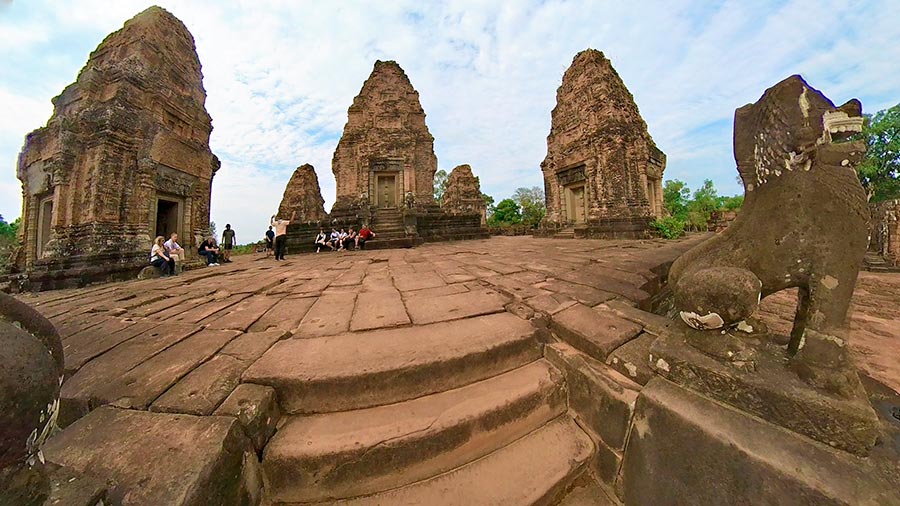
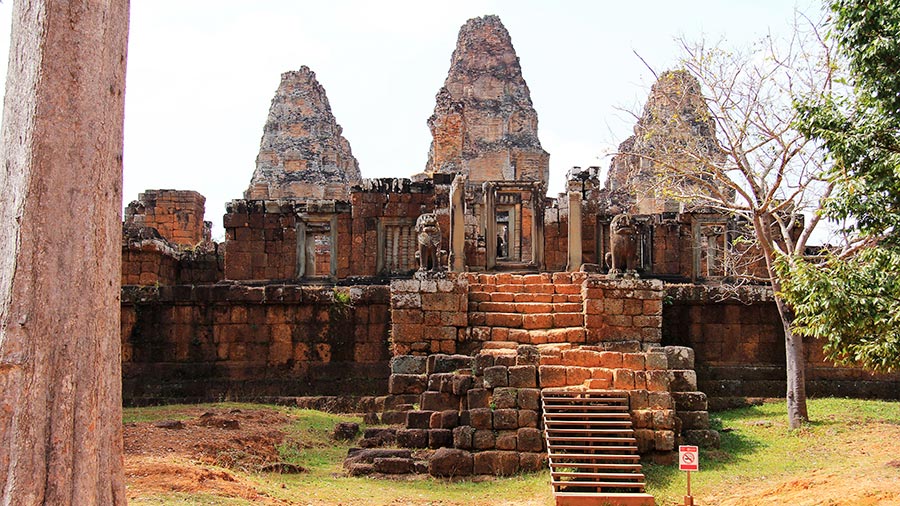
East Mebon is a 10th-century mountain temple built during the reign of Rajendravarman II and dedicated to Shiva. Originally, it stood at the center of a vast artificial reservoir known as the East Baray, now completely dry. In its time, the temple was accessible only by boat, emphasizing its symbolic and strategic importance within Angkor’s hydraulic system. Its stepped terraces and brick towers represent Mount Meru, the sacred mountain of Hindu cosmology.
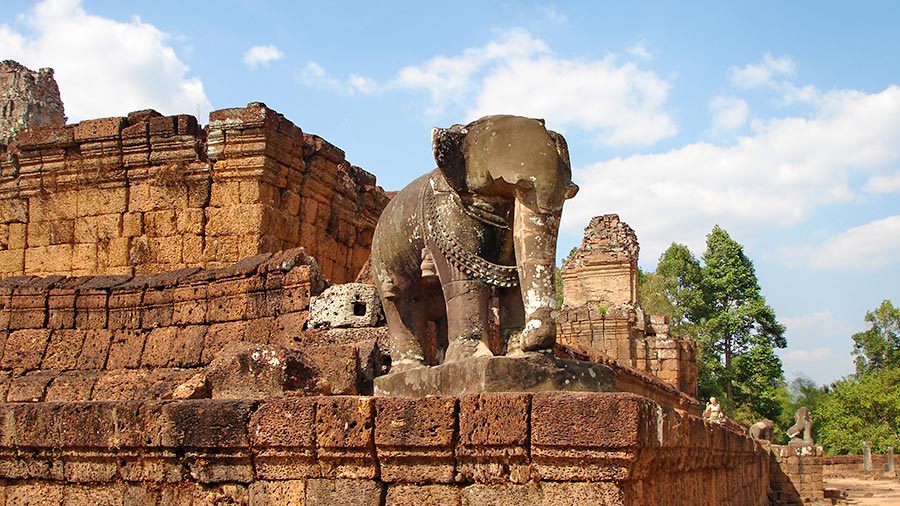
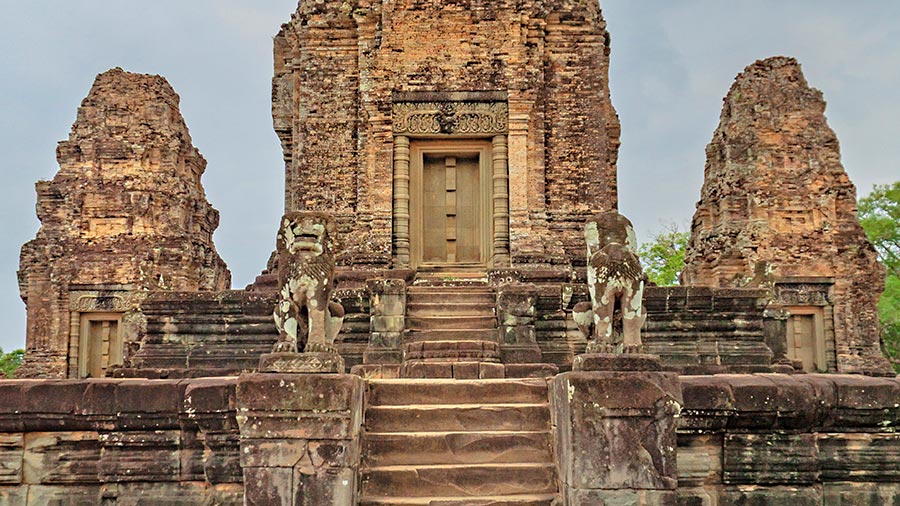
One of East Mebon’s most distinctive features is its set of stone elephants positioned at the corners of the terraces. These sandstone sculptures are remarkably well preserved and give the temple a monumental presence. The brick towers, decorated with devatas, carved lintels, and traces of stucco, hint at the temple’s original appearance. The contrast between reddish brick, laterite, and sandstone creates a striking visual effect, especially under the warm light of sunrise or sunset.
Exploring East Mebon with an experienced local guide helps you understand its role within Angkor’s hydraulic network, interpret its carvings, and learn the history of the East Baray. A guide can also point out architectural details often overlooked, such as inscriptions, guardian statues, or the temple’s symbolic alignments. Visiting in a private vehicle makes it easy to combine East Mebon with Pre Rup, Ta Som, or Banteay Srei in a comfortable and well-planned route.
PHNOM BAKHENG – THE SUNSET VIEWPOINT TEMPLE
Phnom Bakheng is one of the oldest mountain temples in Angkor and one of the best viewpoints in the entire complex. Built at the end of the 9th century during the reign of Yasovarman I, it marked the first great capital of the Khmer Empire in the Angkor region. Its seven-tiered pyramid symbolizes Mount Meru and represents the beginning of classical Khmer architecture. Although today it is famous for its views, Phnom Bakheng holds enormous historical importance as the spiritual and political center of the early Angkorian city.
The ascent follows a path that climbs the hill and gradually reveals views of the surrounding jungle. At the top, the upper platform offers a privileged panoramic perspective. From here, you can see Angkor Wat in the distance—especially at sunset, when the temple glows with golden tones and the sky fills with warm colors. This iconic view has made Phnom Bakheng one of the most popular places to enjoy the end of the day, though it is equally beautiful early in the morning.
Visiting Phnom Bakheng with a professional local guide helps you understand its role as a state temple, its religious symbolism, and its importance in the early history of Angkor. A guide can also help you choose the best time to avoid crowds, find the most photogenic viewpoints, and discover architectural details that often go unnoticed. Arriving in a private vehicle makes it easy to reach the start of the trail and combine Phnom Bakheng with Angkor Wat or Angkor Thom in the same route.
Phnom Bakheng is ideal for travelers who enjoy panoramic views, photography, and temples with strong historical significance. Its elevated location and peaceful atmosphere at sunrise make it a perfect place to begin or end the day in Angkor. It is an essential stop for anyone wanting to see the complex from a different perspective and appreciate the vastness of Siem Reap’s sacred landscape.
PRASAT KRAVAN – THE TEMPLE OF BRICK RELIEFS
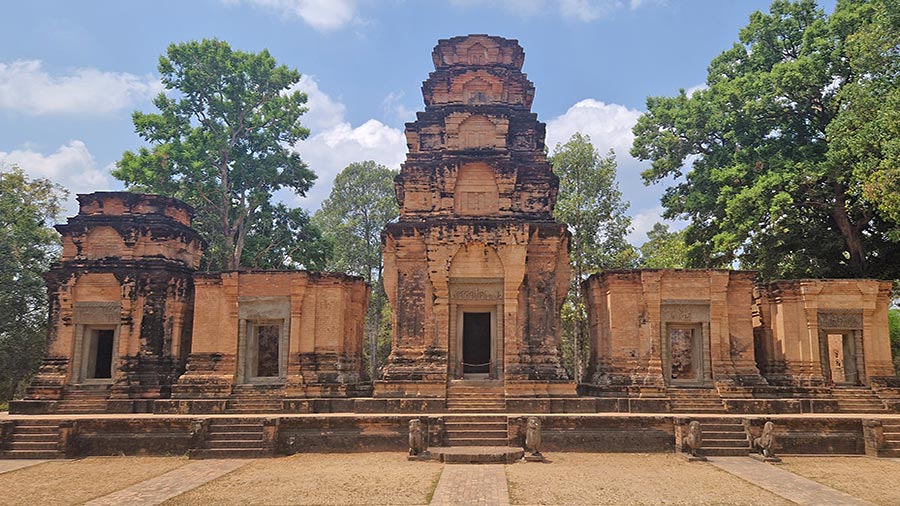
Prasat Kravan is a 10th-century temple built during the reign of Harshavarman I and dedicated to Vishnu. Although smaller than many other Angkor temples, it stands out for its symmetrical design and for being constructed almost entirely of brick, a material that allowed for a distinctive decorative style. Its layout consists of five aligned towers on a single platform—a rare configuration within the complex that gives the temple a unique identity.
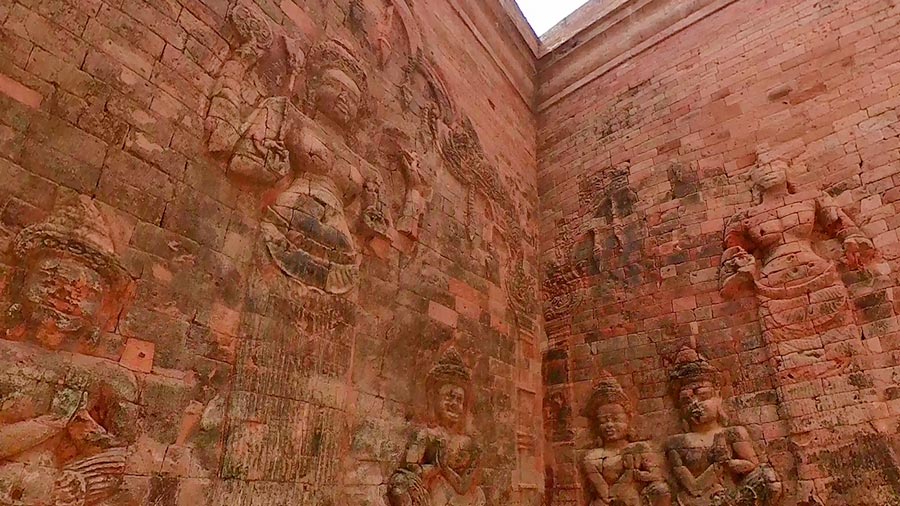
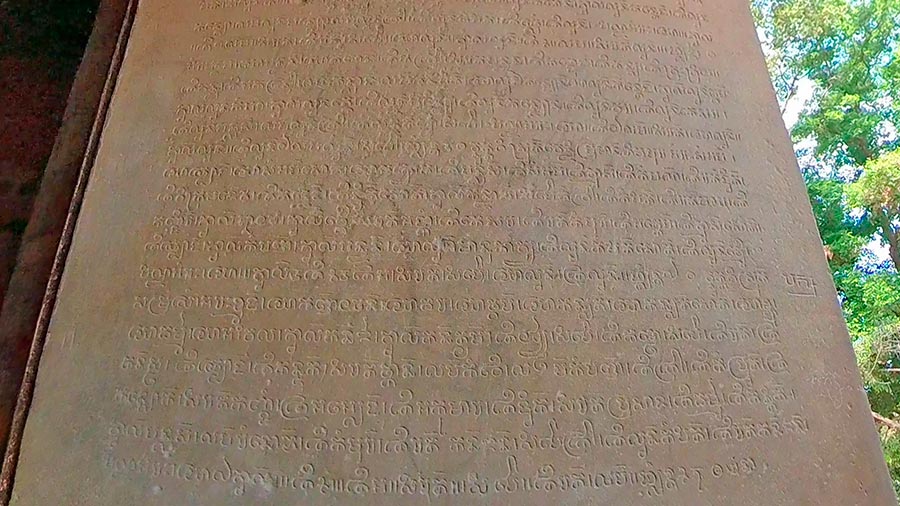
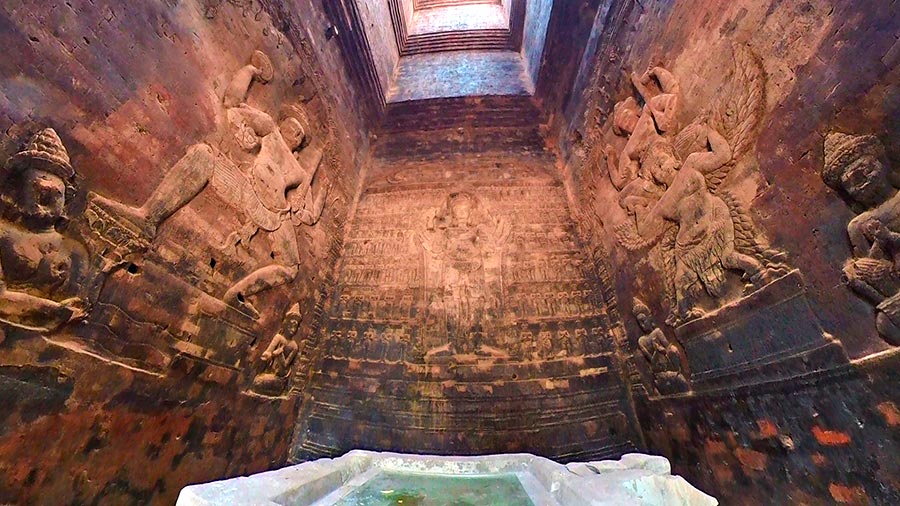
The most remarkable feature of Prasat Kravan lies inside its towers: reliefs carved directly into the brick, something extremely rare in Angkor. Inside the central sanctuary, three walls display scenes of Vishnu—Vishnu on Garuda, Vishnu taking the great stride, and Vishnu with eight arms surrounded by devotees—all carved directly into the brick surface. The entrance frame of the central sanctuary still preserves traces of an ancient Khmer inscription. In the northern sanctuary, a relief of Lakshmi is also carved directly into the brick walls. The technique, combining molded bricks with in-situ carving, is one of the temple’s most fascinating and unusual features.
Visiting Prasat Kravan with a local Siem Reap guide helps you understand the importance of these reliefs, their religious symbolism, and the construction techniques that make them unique. A guide can also show how the morning light enhances the brick textures and explain the temple’s place in the pre–Angkor Wat period. Arriving in private transportation makes it easy to combine Prasat Kravan with nearby temples such as Banteay Kdei, Srah Srang, or Phnom Bakheng in a balanced route.
Prasat Kravan is ideal for travelers who enjoy architectural details, Hindu iconography, and less crowded temples. Its compact size allows for a quick yet fascinating visit, and its interior reliefs make it a hidden gem within the small circuit. It is a perfect stop to add variety to your itinerary and discover a different facet of Khmer art.
BENG MEALEA – THE LOST TEMPLE IN THE JUNGLE
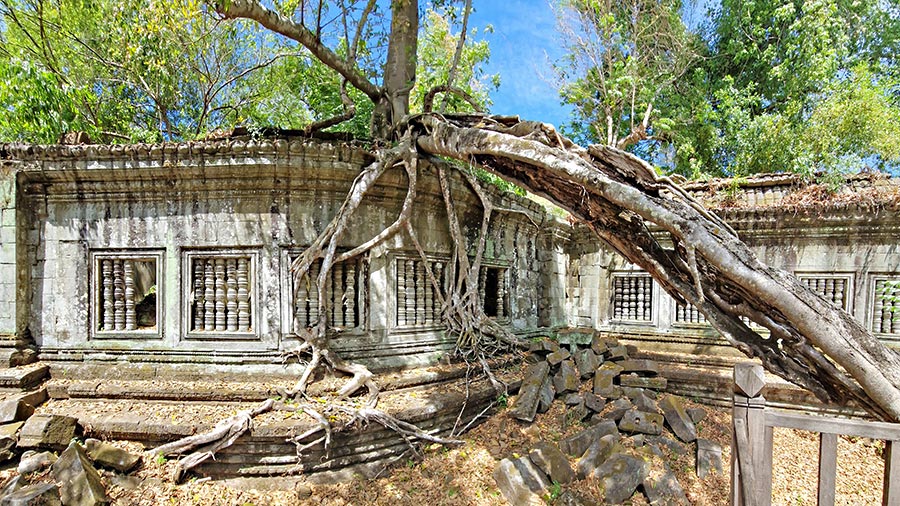
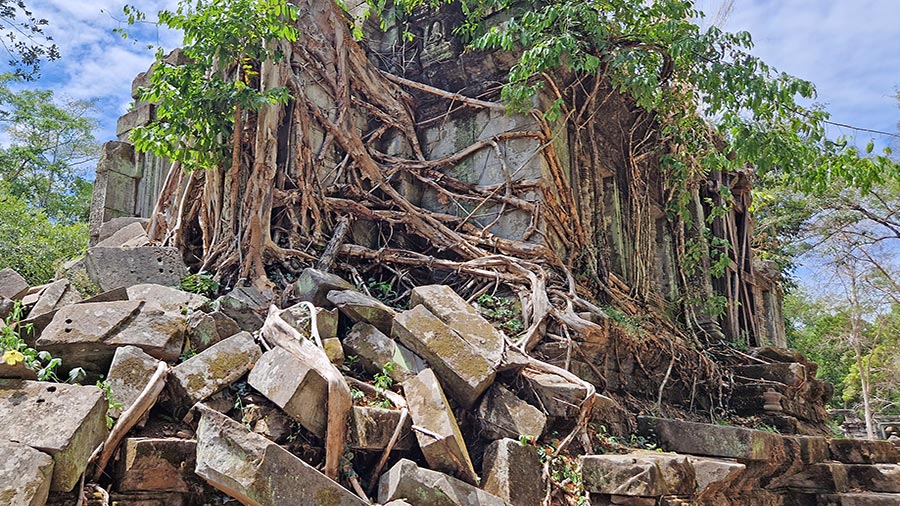
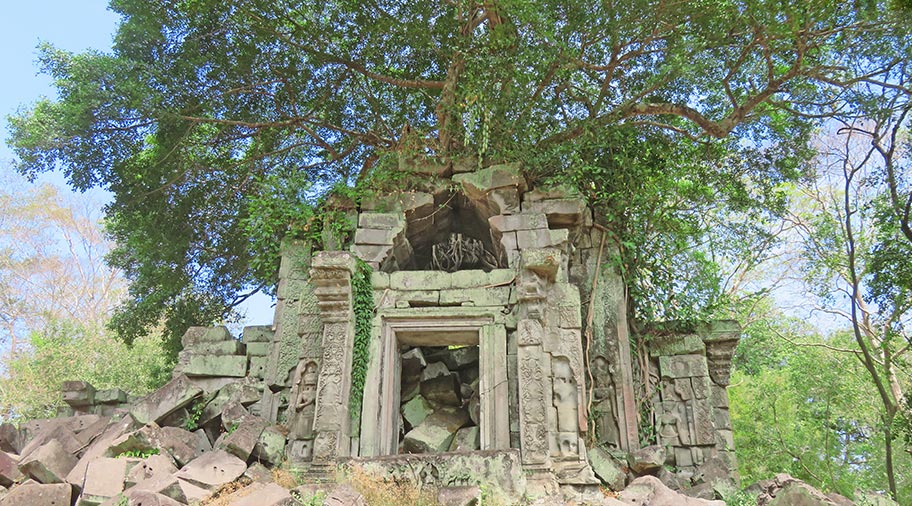
Beng Mealea is one of Angkor’s most mysterious and atmospheric temples, famous for its almost completely collapsed state and the way the jungle has reclaimed it. Built in the 12th century, likely during the reign of Suryavarman II (the same king who built Angkor Wat), it follows a similar architectural style but was never restored. Its wild appearance—massive sandstone blocks scattered across the ground and trees growing through the ruins—creates an atmosphere of pure exploration.
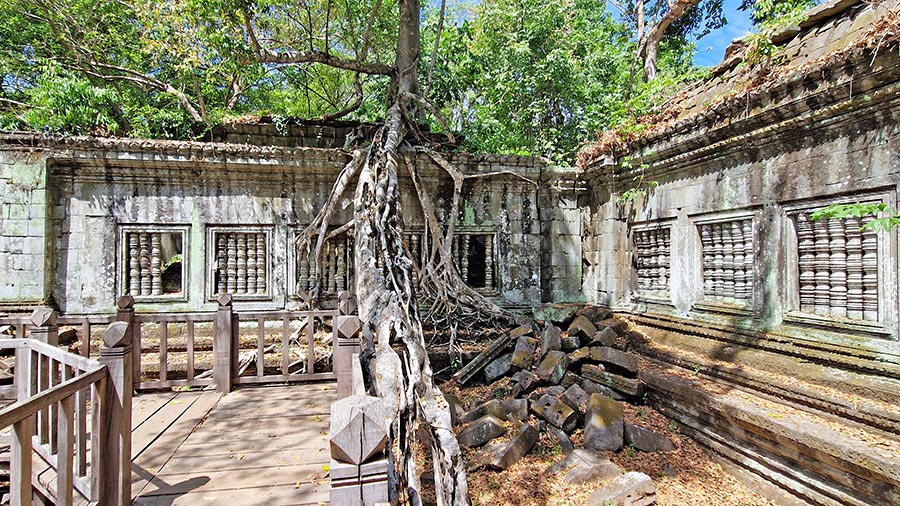
The visit begins among huge fallen blocks, wooden walkways, and corridors weaving through roots and vegetation. Unlike restored temples, Beng Mealea gives the sensation of discovering a forgotten place. Light filters through the canopy, illuminating fragments of carvings, hidden devatas, and the remains of ancient galleries slowly being reclaimed by nature.
Inside, the corridors narrow and widen unpredictably. Some areas require gently climbing over fallen stones, adding a sense of adventure. Among the most striking details are the pediments carved with mythological scenes, the remains of libraries, and courtyards where nature has created dramatic shapes. It is a temple that invites slow exploration and rewards curiosity.
The walk through Beng Mealea is unlike any other temple experience: wooden walkways, collapsed corridors, vegetation-covered courtyards, and walls seemingly swallowed by the jungle. Its dimensions are enormous—comparable to Angkor Wat—but its ruined state gives it a unique character. Highlights include root-covered doorways, collapsed galleries, and courtyards where the interplay of light and shadow creates an almost cinematic atmosphere.
Beng Mealea lies about 65 km from Siem Reap, so traveling with a specialized local guide helps you understand its history, its connection to Angkor Wat, and why it has been preserved in this “natural” state. A guide also helps you navigate the labyrinth of ruins, identify hidden carvings, and explore quieter corners. It can be comfortably combined with a visit to Koh Ker or Banteay Srei.
KBAL SPEAN – THE RIVER OF A THOUSAND LINGAS
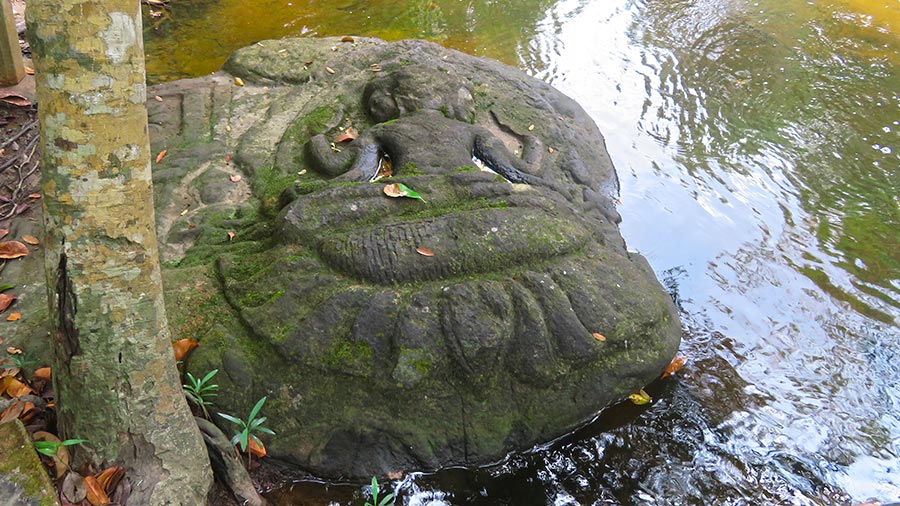
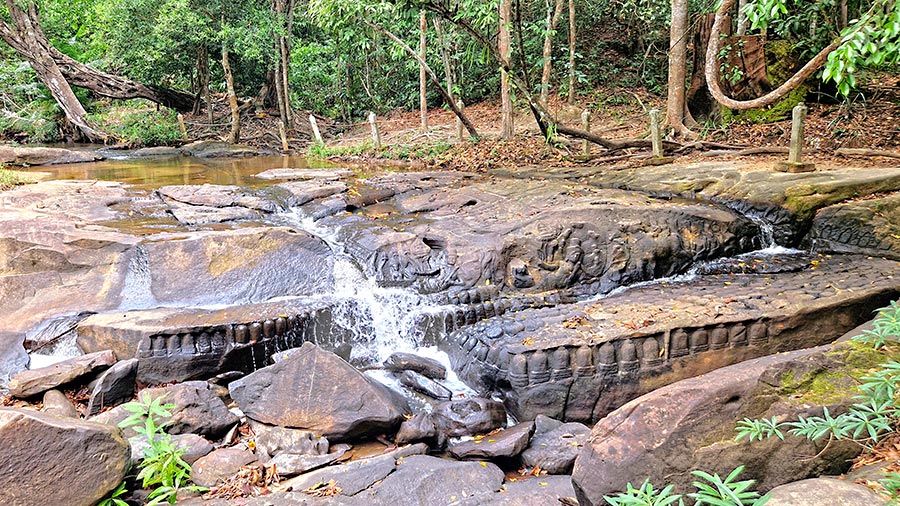
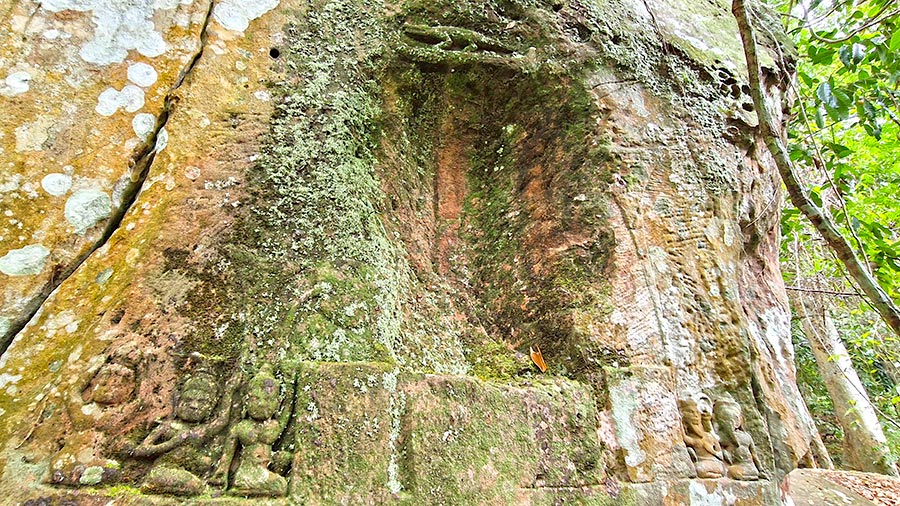
Kbal Spean is one of the most surprising and symbolic sites in Angkor, known as the River of a Thousand Lingas. Unlike traditional temples, this archaeological site lies in the mountains and blends nature, spirituality, and rock carvings. Created by Hindu hermits during the 11th and 12th centuries, it was designed to bless the waters flowing toward the Angkor plain and formed part of the Khmer Empire’s sophisticated hydraulic system.
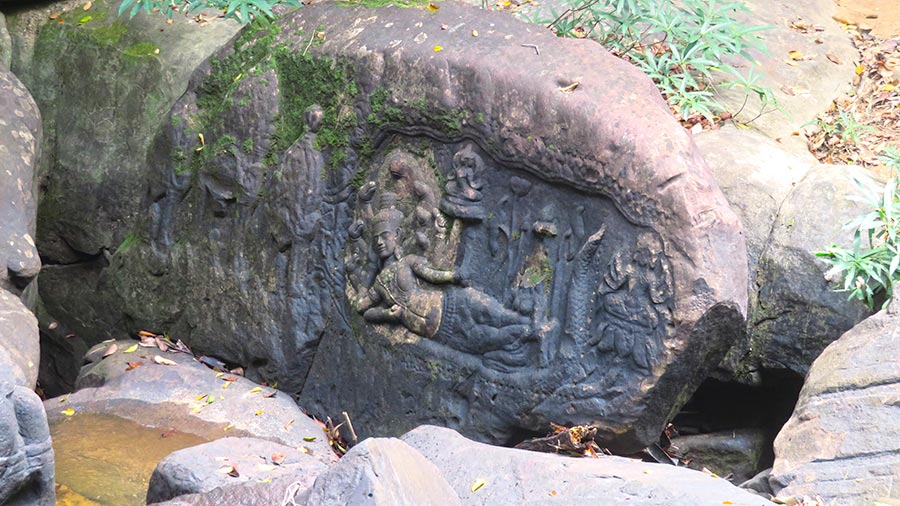
The journey to Kbal Spean begins with a 1.5 km hike through the jungle, following rocky paths surrounded by lush vegetation. Upon reaching the river, hundreds of lingas (phallic symbols of Shiva), divine figures, mythological animals, and sacred scenes appear carved directly into the stone riverbed. Water flows over these carvings, symbolizing purification before reaching Angkor’s fields and temples. You can also see reliefs of the reclining Vishnu, Shiva and Uma, and floral motifs carved with remarkable precision.
Visiting Kbal Spean with a professional local guide helps you understand the religious meaning of the site, its connection to the hydraulic system, and the importance of water in Khmer cosmology. A guide can also point out hidden carvings, explain mythological scenes, and suggest the best places to rest or take photos. Access by private vehicle is essential, as Kbal Spean is located about 50 km from Siem Reap and is often combined with Banteay Srei or Phnom Kulen.
Kbal Spean is ideal for travelers who enjoy nature, hiking, and places with deep spiritual symbolism. Its blend of jungle, water, and rock art makes it an experience unlike any other in Angkor. It is a perfect stop to add variety to your trip and discover how the Khmer people integrated religion into their natural environment.
Visiting the temples of Angkor is not just a sightseeing excursion—it is a deep immersion into Khmer spirituality and art in Cambodia, a UNESCO World Heritage Site. With me as your professional guide in Siem Reap, you will discover the most impressive temples, their history, art, legends, and little-known secrets that will make your experience unforgettable. If you are planning your trip and want to explore Cambodian architecture, I will accompany you as a local guide on personalized tours so you can visit all the temples of Angkor you wish to explore during your stay.